
National Human Trafficking Prevention Month
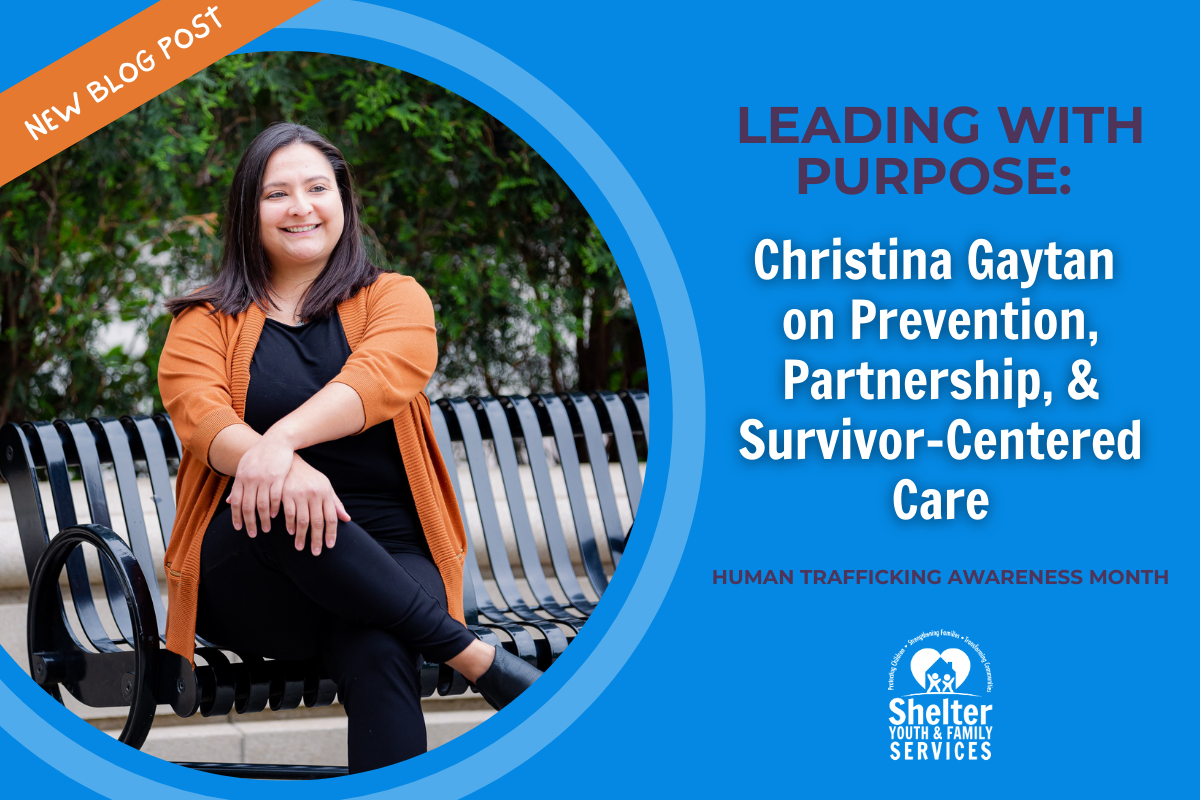
January is National Human Trafficking Prevention Month, a time to elevate not only awareness, but action. This year, we are proud to highlight Christina Gaytan, our newly promoted Director of Anti-Trafficking & Prevention, whose leadership reflects Shelter’s deep commitment to survivor-centered, trauma-informed, and community-driven solutions.
Christina will lead a team at Shelter Youth & Family Services’ new therapeutic home dedicated to young female survivors of human trafficking opening this spring in the northwest suburbs of Illinois. She brings both vision and urgency to this work—grounded in lived realities, systems-level understanding, and an unwavering belief that prevention must be paired with meaningful response.
Awareness Is Only the Beginning
Human trafficking prevention often begins with awareness campaigns, but Christina is clear that awareness alone is not enough.
“Awareness is a great starting point, but it does not stop exploitation on its own. Survivors need appropriate intervention, consistent services, and systems that are prepared to respond in a timely and coordinated manner. Without intentional action, individuals in need continue to fall through the cracks of society.”
Her leadership centers on closing those gaps—strengthening systems so that when a survivor reaches out for help, the response is coordinated, compassionate, and effective. Prevention, in Christina’s approach, means ensuring pathways to safety are real, accessible, and sustained.
Centering Survivors Through Specialized Leadership
Survivors of trafficking often encounter fragmented systems that unintentionally create additional harm. Christina’s role exists to disrupt that cycle.
“Survivors of exploitation often encounter broken systems that can inadvertently cause further harm. Specialized leadership helps to ensure consistency in care and keeps survivor needs at the center with intention.”
As Director, Christina is focused on embedding trauma-informed practices across programs, building trust through consistency, and ensuring survivor voices guide decision-making. Her vision prioritizes long-term stability, not just immediate safety, by fostering meaningful relationships that support healing, independence, and self-determination.
“By using a trauma-informed approach, our team will build and sustain meaningful relationships that support healing and guide survivors toward long-term stability and independence. We are committed to doing this work with care, accountability, and purpose.”
Prevention Happens in Community
Human trafficking does not happen in isolation—and neither does effective prevention.
“Human trafficking does not occur in a vacuum. For this reason, we rely heavily on collaborative efforts with our community members.”
Christina emphasizes the critical role of partnerships with social service agencies, first responders, healthcare providers, schools, and other community stakeholders. These collaborations allow Shelter to respond more holistically, share responsibility for a growing need, and strengthen the safety net for those most at risk.
“These intentional partnerships allow us to share responsibility for a growing need while providing effective services.”
Looking Ahead
Christina’s promotion reflects Shelter’s ongoing investment in leadership that is values-driven, survivor-centered, and impact-focused. As we observe National Human Trafficking Prevention Month, her message is clear: prevention is not passive. It requires preparation, partnership, and purpose.
We are grateful for Christina’s leadership and for the community partners, advocates, and supporters who stand alongside us in this work. Together, we are not just raising awareness. We are building systems that protect, respond, and help survivors thrive.
Learn more about Shelter’s work in anti-trafficking prevention and survivor support.