
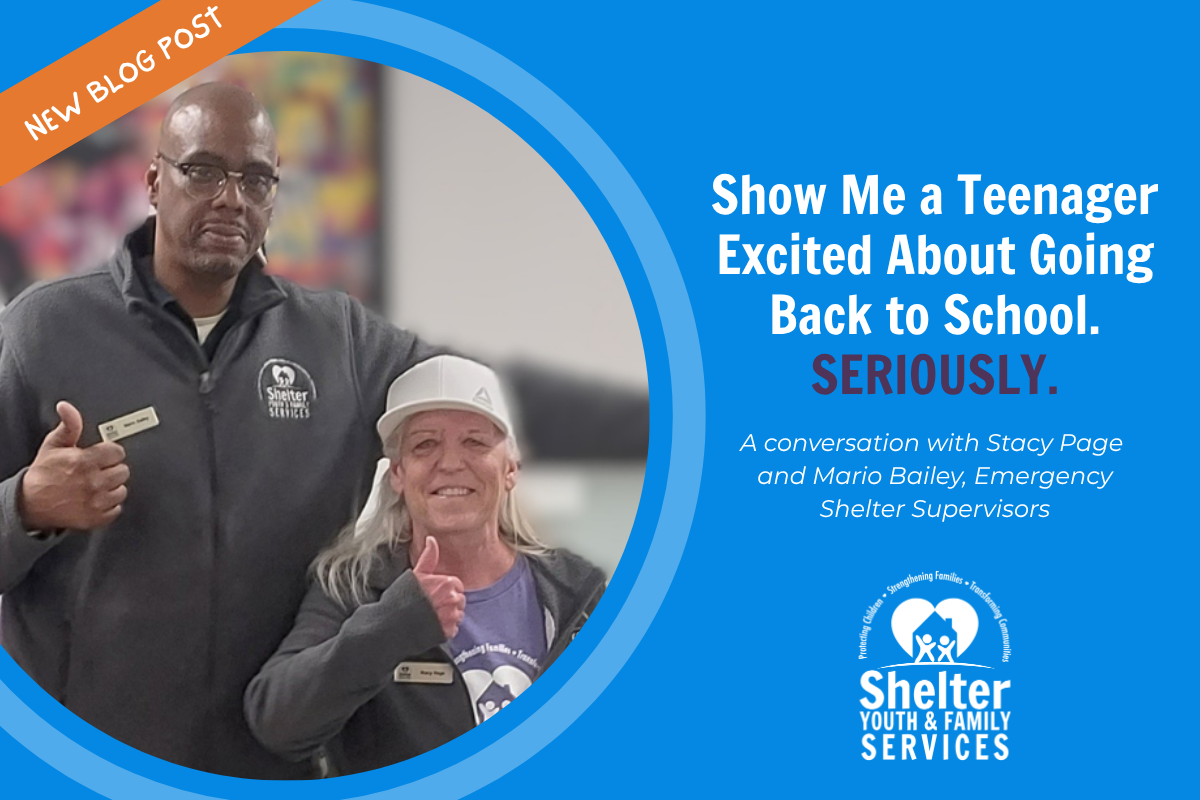
A conversation with Stacy Page and Mario Bailey, Emergency Shelter Supervisors at Shelter Youth & Family Services.
When we sat down with Stacy Page and Mario Bailey to talk about back-to-school season, I thought I knew where it would go. Together, they have spent more than 55 years working with youth experiencing crisis. I assumed we’d spend our time talking about motivation. How do you encourage teenagers to care about school? Make friends? Join clubs and activities? Build relationships with staff and other residents, when these youth may only be there a short time?
That perspective lasted about five minutes.
One of the first things Stacy described wasn’t resistance. It was excitement.
“A lot of the youth come from a chaotic background. Knowing they’re going to get up at 5:30, do their hair and lashes, catch that bus at 7:12. First bell is at 7:30. They’re going to see their new friends. They’re going to go to dance club or a pep rally. And when they get off that bus, they can check in with us and tell us how their day went. They thrive on structure.”
That wasn’t the picture I had in my head.
Then I asked Mario what people most misunderstand about teenagers living in emergency shelters.
“People think they’re uncontrollable—that they’re going to cause problems and damage property.”
He paused.
“Ninety percent of the time it’s the complete opposite. They just want someone to care about them, advocate for them, and keep them safe. They may not know a regular lifestyle. They deserve to hang out with friends after school, be in sports, even go to Great America.”
Child psychiatrist Dr. Bruce Perry helped shape trauma-informed care by encouraging adults to ask, “What happened to this child?” instead of “What’s wrong with this child?” That simple shift recognizes that behavior often reflects experience, not identity.
Listening to Stacy and Mario, I noticed something. Neither of them—not once—talked about changing the young people they serve. Instead, they talked about changing the environment around them.
When I asked Stacy how they built trust, she didn’t hesitate.
“Follow through.”
She explained that trust comes from consistency. Do what you say you’re going to do.
“Many of the young people arriving at Shelter have experienced broken promises. Our staff celebrate milestones, show up for holidays, create memories, and make sure that when they promise something, they deliver. We love getting together for cookouts on the holidays. We did a prom, red-carpet sendoff.”
Mario described what that consistency creates.
“The goal isn’t simply providing a roof over someone’s head. It’s making sure every young person feels safe, cared for, and knows exactly what to expect when they return from school each afternoon.
Stacy was quick to add.
“And when they leave, they do sit and cry. They thank us. They show us all the mementos they were able to collect from here. I like to print pictures for them of their special days. We want them to have those core positive memories to take with them.”
By the end of our conversation, I realized we’d spent almost an hour without really talking about back-to-school. We talked about safety and trust. Consistency. Belonging. And the judgment these young people often face.
It’s not that young people in emergency shelters need to be convinced to care. More often than not, they already do. That’s the biggest misconception challenged here. Most of these youth are eager to go to school, make friends, join clubs, go to games, and be teenagers again. Or maybe, for the very first time.
How You Can Help
Stacy Page and Mario Bailey have created a wish list of the everyday items they know make the biggest difference to youth experiencing homelessness. And yes, they even included eyelashes!